How to Thin Acrylic Paint? For Complete Newbies!
Optimize your acrylic painting experience by discovering the secrets to achieving the perfect flow and consistency with the right thinning techniques.
Optimize your acrylic painting experience by discovering the secrets to achieving the perfect flow and consistency with the right thinning techniques.

When you apply acetone to acrylic paint, you can expect a partial softening of the paint. This is because acetone can break down the water-based components of acrylic paint, making it more pliable. However, keep in mind that acrylic paint is generally more resistant to acetone than oil-based paints.

You can sand acrylic paint, but with caution. Acrylic paint can be sanded, but it requires careful consideration of the paint’s properties and the sanding process.

Acrylic paint must comply with the Transportation Security Administration’s (TSA) 3.4-ounce liquid restriction in carry-on baggage.

Working with acrylic paint and polyurethane requires careful consideration to ensure a successful finish, but is it even possible to combine them?

Water can be used with acrylic paint to achieve desired effects and consistency. High-viscosity paints can tolerate more water than lower-viscosity acrylics without separating. Adding water to paint softens edges, merges colors, and creates depth and dimensionality. Experimenting with different water-to-paint ratios will help you achieve the desired consistency and effect.

A general starting point for the ratio of acrylic to chalk paint is 1:1 or 2:1, favouring chalk paint. You should test the mixture on a small, inconspicuous area is vital before applying it to the final surface.
Water-based acrylic paint is generally considered safe for skin use when applied properly but may cause skin irritation and allergic reactions to some people. High-quality, non-toxic water-based acrylic paint specifically designed for skin use is recommended.
Enamel paint is not a type of acrylic paint, despite their similarities in application and finish. Enamel paint uses a solvent-based or oil-based formula, whereas acrylic paint uses water-soluble acrylic polymers. The binder systems in enamel and acrylic paints affect their durability, drying times, and resistance to environmental factors.
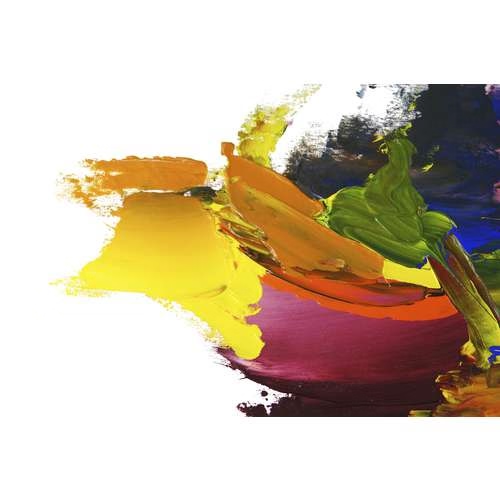
Heavy body acrylic paint has a thick, buttery consistency ideal for impasto techniques and creating texture. It retains brushstrokes well and has excellent color intensity, making it ideal for expressive artwork. Heavy body acrylics are opaque and do not blend with underlying layers, allowing for bold, high-contrast colors.